
Enhance Your Yard with Professional Stump Grinding Solutions from Dave's Tree Service
A leftover tree stump can make an otherwise tidy yard feel unfinished. It sits in the way of mowing, steals space from planting, and slowly becomes a magnet for pests, fungi, and trip hazards. Even when the tree is gone, the stump keeps the job half done.
That is where stump grinding makes a real difference. Instead of digging out the whole root system and tearing up the surrounding ground, a trained crew grinds the visible stump into small wood chips below the soil line. The result is a safer, cleaner, more usable yard without the heavy disturbance of full stump removal.
Dave's Tree Service helps homeowners deal with stubborn stumps in a practical way. Whether the stump is in the middle of a lawn, near a boundary wall, beside a driveway, or tucked into a garden bed, the right grinding approach can clear the space and prepare it for whatever comes next.

Why old stumps cause more trouble than they seem
A stump may look harmless at first. It is solid, low to the ground, and easy to ignore after the tree has been cut down. Over time, though, it can affect the yard in several ways.
The most obvious issue is space. A stump blocks lawn equipment, outdoor seating, planting beds, and footpaths. If it sits in a narrow area, it can make a garden feel awkward and hard to maintain.
There is also the safety factor. A low stump can trip children, guests, delivery workers, or anyone walking through the garden at night. Grass can grow around it and hide the uneven surface. That turns a small obstacle into a real hazard.
Old stumps also decay. As wood breaks down, it can attract insects and fungal growth. Not every stump creates a pest problem, but rotting wood can invite activity that most homeowners would rather keep away from healthy plants and outdoor living areas.
Then there is appearance. A single stump can interrupt the clean line of a lawn or make a newly landscaped area look unfinished. If the tree was removed because it was diseased, damaged, or storm-hit, leaving the stump behind can keep that rough look in place.
Stump grinding solves the visible problem quickly while allowing the ground to settle naturally afterwards.
What professional stump grinding actually involves
Stump grinding is a mechanical process that uses a specialised machine with a rotating cutting wheel. The wheel chips away at the stump layer by layer until the remaining wood sits below ground level.
The operator controls the depth and movement of the grinder, working carefully across the stump and exposed surface roots. The machine reduces the stump to chips, which can usually be reused as mulch or removed depending on the condition of the wood and the needs of the site.
This is different from pulling out a stump. Full removal means extracting the stump and major roots from the ground. That can require digging, heavy pulling, and more disruption to the soil. It may be needed in some cases, such as construction work or major regrading, but many yards only need grinding.
Stump grinding
Removes the visible stump and grinds it below the soil surface. It is usually faster and less disruptive.
Stump removal
Pulls out the stump and larger roots. It can leave a bigger hole and disturb more of the yard.
A professional crew will assess the stump before starting. They look at size, wood condition, location, nearby structures, access for equipment, and any visible obstacles. This matters because every stump sits in a slightly different setting.
For example, a stump in an open lawn is different from one beside paving. A stump near a fence line needs extra care. A stump close to irrigation lines, garden edging, or underground utilities should be handled with planning rather than guesswork.
How Dave's Tree Service prepares your yard for grinding
Good stump grinding starts before the machine touches wood. Dave's Tree Service focuses on safe access, clear work space, and careful handling of the surrounding area.
The first step is usually a look at the stump and nearby ground. The team checks whether the stump is fresh or decayed, how wide it is at the base, and whether any surface roots need attention. Stumps are often wider below the cut line than they first appear, so visual inspection matters.
Next, the work area is cleared. Loose stones, decorations, plant pots, children’s toys, and other movable objects should be taken out of the way. Stones can damage equipment or become hazards during grinding. A clear area also gives the operator better control.
If the stump sits near plants you want to keep, the crew can work with extra care around the border. Grinding is targeted, but it still creates wood chips and movement around the stump. Clear communication helps protect the parts of the yard that matter most.

Safety also shapes the setup. The operator needs stable footing, clean visibility, and enough space to manoeuvre the equipment. If a stump sits on a slope or in a tight corner, the plan may need small adjustments.
The goal is simple. Remove the stump cleanly, protect the surrounding yard where possible, and leave the space ready for the next step.
The benefits of choosing professional stump grinding
Some yard jobs are good do-it-yourself projects. Stump grinding rarely belongs in that category. The equipment is powerful, the cutting wheel is unforgiving, and the work area can hide roots, stones, and uneven ground.
A professional service brings experience as well as machinery. That means the work usually moves faster, with less risk to the yard and nearby features.
Your yard becomes easier to maintain
Mowing around a stump wastes time. So does trimming grass that grows tight against old wood. Once the stump is ground down, the area becomes easier to level, seed, mulch, or plant.
This makes a noticeable difference in small lawns. It also helps in larger properties where small obstacles add up and slow down routine maintenance.
You reduce common safety risks
Trips and falls often happen around changes in ground level. A stump creates exactly that kind of hazard. Grinding lowers the stump below the surface, which helps restore a smoother walking area once the spot is backfilled and settled.
This matters near pathways, play areas, driveways, and garden entrances.
You improve the appearance of the whole yard
A cleared stump area makes the garden look intentional again. The space no longer feels like a leftover from an old tree removal job.
After grinding, the area can support new grass, decorative gravel, a flower bed, or a fresh landscaping feature. A single cleared spot can change how the whole yard reads.
You avoid unnecessary damage
Trying to pull, burn, chop, or chemically treat a stump can create new problems. Burning may be unsafe or restricted in many areas. Chemicals take time and may not suit every garden. Chopping by hand is slow and physically demanding.
Professional grinding gives a more controlled solution. It focuses on the stump without requiring broad disturbance of the surrounding soil.
What happens to the wood chips after grinding
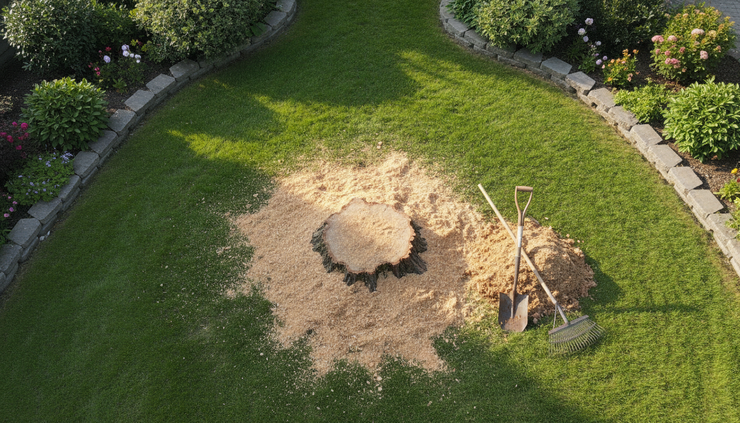
Stump grinding produces a mix of wood chips, small root fragments, and soil. The amount depends on the size of the stump and how deep the grinding goes.
Those chips do not have to go to waste. In many cases, they can serve useful roles around the garden.
Common uses include:
Mulching around trees and shrubs, if the wood is healthy and suitable
Filling the stump hole before adding topsoil
Covering bare areas temporarily to reduce mud
Adding to a compost system in small amounts, where appropriate
If the tree had disease or pest issues, keeping the chips may not be the best choice. In that case, removal is often cleaner. Dave's Tree Service can advise on whether to reuse or clear the material based on the condition of the stump.
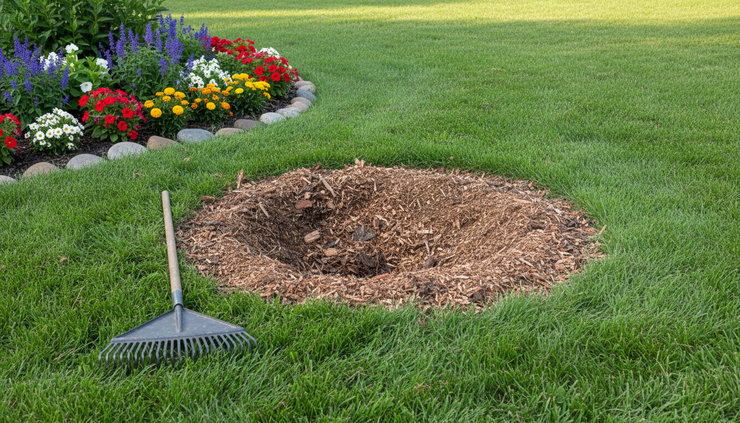
The stump hole should not be filled with only fresh chips if you plan to grow grass right away. Wood chips break down over time and can cause the area to sink. A better approach is to remove excess chips from the top layer, add quality soil, level the surface, then seed or turf the area.
How to plan the area after the stump is gone
Grinding removes the obstacle. The next step is deciding what the cleared space should become.
If the stump was in a lawn, grass may be the simplest choice. Rake out extra chips from the top, add soil, level the area, and sow seed. Keep foot traffic low while the grass establishes. Water lightly and regularly, based on the season and soil conditions.
If the stump was in a garden bed, the spot can become part of the planting plan. Fresh compost and soil may help improve the area, especially if the old tree roots used many of the nutrients. Choose plants that suit the light, soil, and drainage of that part of the yard.
If the stump was near a patio or driveway, decorative gravel or paving repair may make more sense. Grinding can clear the obstruction, then a landscaper or homeowner can finish the surface.
A freshly ground stump area can become:
A patch of new lawn
A flower or herb bed
A gravel feature
A seating corner
A space for a young replacement tree, placed at a suitable distance
Planting a new tree in the exact same spot is not always ideal. Old roots, compacted soil, and leftover wood can affect growth. If you want a replacement tree, choose the location carefully and prepare a proper planting hole away from the old stump zone where possible.
When stump grinding is the right choice
Stump grinding suits many common yard situations. It works well when you want a clean surface, safer lawn, and better appearance without digging out the entire root system.
It is often the right option when:
The stump creates a mowing obstacle
The yard needs a cleaner look after tree removal
The stump sits in a play or walking area
The wood is starting to rot
The space is needed for a garden update
You want a faster, lower-disruption solution than full removal
There are times when a different method may suit better. If construction will take place directly over the stump area, full root removal may be needed. If the stump is tangled with utility lines, pipes, or structural features, the job needs careful assessment before any work begins.
A professional inspection helps avoid the wrong method. Dave's Tree Service can look at the location, access, and future use of the area before recommending the best path.
What to expect on service day
A smooth stump grinding appointment is usually straightforward. The crew arrives with the right equipment, confirms the stump or stumps to be ground, checks the surroundings, and prepares the work area.
The actual grinding time depends on stump size, species, age, access, and depth required. Smaller stumps can be handled quickly. Large or hard stumps take longer, especially if they have broad surface roots.
During the work, expect noise from the grinder and visible wood chips around the stump. This is normal. A professional operator controls the direction and pace of grinding to keep the process as tidy and safe as possible.
After grinding, the area is left with chips and a depression where the stump stood. Depending on the service arrangement, the crew may spread chips, clear excess material, or leave the site ready for soil and landscaping.
Before the team leaves, it helps to ask:
How deep the stump was ground
Whether the chips are safe to reuse
How soon to add soil or seed
Whether any roots may remain near the surface
What aftercare will help the area settle
These answers make it easier to finish the yard properly.
Why choose Dave's Tree Service for stump grinding
Good stump grinding is about more than removing wood. It is about understanding the yard, protecting nearby features, using the right machine, and leaving the space ready to improve.
Dave's Tree Service brings a practical, careful approach to the job. The team can handle stumps that affect lawns, garden beds, walkways, driveways, and outdoor living areas. They assess each site on its own conditions rather than treating every stump the same way.
That matters because yards are full of small details. A young garden plant near the stump, a stone border, a slight slope, or limited equipment access can change how the work should be done.
With professional stump grinding solutions from Dave's Tree Service, the focus stays on a clean result and a safer yard. The stump disappears as a daily nuisance, and the space becomes useful again.
A better yard starts by clearing what is in the way
A stump can hold back a yard for years. It interrupts the lawn, complicates maintenance, creates a trip risk, and keeps the space from looking finished. Grinding it down is a direct, effective way to move forward.
Once the stump is gone, the possibilities open up. You can repair the lawn, refresh the garden, add a seating area, or simply enjoy a cleaner outdoor space.
Professional stump grinding gives the job the right equipment, safer handling, and a better finish. For a yard that feels open, usable, and cared for, removing the stump is often the simplest first step.


