
Why Late Summer Tree Inspections Matter in the Hudson Valley
- Dave's Tree Service
- 2 days ago
- 5 min read
Late summer can make trees look stronger than they are. The canopy is still full, lawns are green, and many stress signs hide behind healthy-looking leaves. Then autumn arrives with soaking rain, gusty fronts, heavy leaf drop, and the first cold nights. A weak limb that seemed harmless in August can become a real problem by October.
That is why late summer is one of the best times to inspect trees in the Hudson Valley. It gives property owners time to spot damage, treat manageable issues, and schedule pruning before fall weather adds more pressure.

Late summer reveals what spring growth can hide
Spring growth often makes trees look refreshed. New leaves fill gaps, small dead branches blend into the canopy, and minor bark damage may not stand out. By late summer, the season’s stress has had time to show.
Heat, dry spells, insects, compacted soil, storm damage, and root stress can all leave clues by August or early September. Some signs are subtle, but they matter.
Look for:
Dead or thinning branches
A few bare twigs may be normal, but larger dead sections deserve attention.
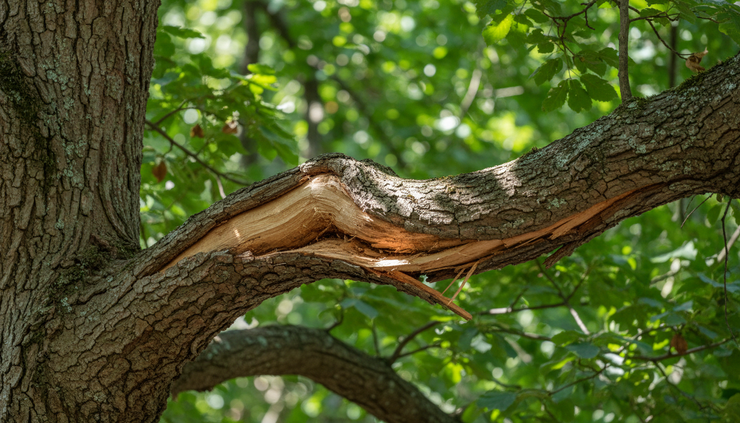
Cracks in major limbs
Splits where limbs join the trunk can worsen under wind or rain.
Early leaf colour or leaf drop
One tree changing much earlier than nearby trees may be under stress.
Fungal growth near the base
Mushrooms at the trunk or root zone can point to decay below the surface.
Peeling bark or open wounds
Damaged bark gives insects and disease more opportunity to enter.
Late summer tree inspections matter in the Hudson Valley because this timing catches problems before trees face the added weight and weather changes of autumn.
Fall weather adds load and risk
Autumn is beautiful in the Hudson Valley, but it can be hard on trees. Leaves hold water during long rains. Wind catches dense canopies more easily before leaf drop. Saturated soil can reduce root grip, especially on slopes or near drainage channels.
A tree does not need to fall to cause damage. A single heavy limb can break fencing, damage a roof, block a drive, or tear utility lines. Trees near homes, garages, paths, roads, and play areas need closer attention because the risk is not only about the tree’s health. It is also about what the tree could hit.
A late summer inspection gives enough time to:
Remove deadwood before storm season
Reduce weight on overextended limbs
Check trees leaning towards structures
Plan work before schedules fill in autumn
Avoid rushed decisions after severe weather
The goal is not to remove every imperfect tree. The goal is to find the few issues that could become expensive or unsafe if left alone.
Common Hudson Valley tree concerns to check before autumn
The Hudson Valley has a mix of mature shade trees, wooded lots, old orchards, street trees, and river-adjacent properties. Each setting brings its own concerns.
Mature maples and oaks need structural checks
Large maples and oaks often form the backbone of local yards and streets. Their size makes defects more serious. A dead branch high in the canopy may not look urgent from the ground, but it can be heavy enough to cause damage when it falls.
Inspect major branch unions, especially where two large stems grow closely together. Tight V-shaped unions can trap bark and become weak points over time. Also check for large cavities, old pruning wounds, and hanging branches left behind after summer storms.
Ash trees deserve extra attention
Ash trees across many parts of the region have faced pressure from emerald ash borer. A declining ash can become brittle as it dies, which makes timing important. Signs may include thinning crowns, bark splitting, woodpecker activity, and shoots growing from the lower trunk.
Not every ash can be saved, and not every ash must come down at once. A qualified arborist can assess condition, location, and risk.
Trees near slopes and wet ground need root-zone checks
Some Hudson Valley properties sit on hillsides, near streams, or on soils that stay wet after rain. Root problems are often harder to see than broken branches, but they can create serious instability.
Warning signs include soil lifting on one side of the tree, new leaning, exposed roots, or cracks in the ground near the trunk. These signs should be taken seriously, especially if the tree leans towards a structure or a frequently used area.
What a practical late summer inspection includes
A good tree inspection is more than a quick glance at the leaves. It works from the ground up and from the trunk out to the canopy.
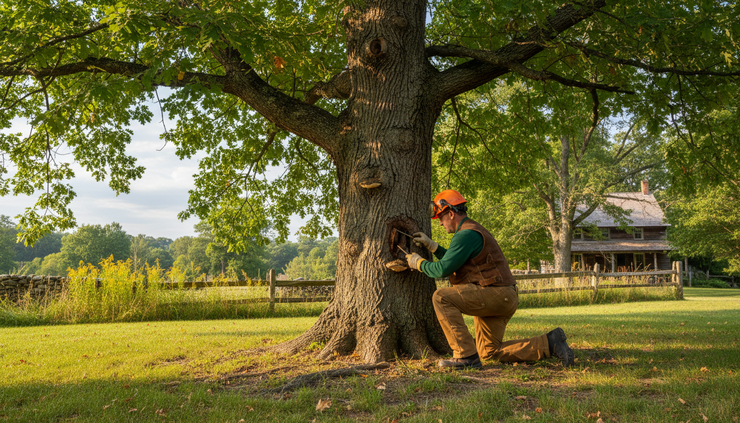
Start at the base. Look for root damage, soil changes, mower injury, fungal growth, and decay. Move up the trunk and check for cracks, holes, loose bark, and old wounds. Then study the canopy for deadwood, broken limbs, uneven leaf density, and branches that cross or rub.
For larger trees, binoculars can help. Photos taken from the same spot each year can also show gradual changes that are easy to miss.
If a tree has a sudden lean, a large fresh crack, hanging limbs, or root movement after a storm, treat it as urgent and keep people away until it is assessed.
Homeowners can spot many warning signs, but climbing, cutting large limbs, and working near power lines should be left to trained professionals. Tree work can be dangerous, and improper cuts can weaken a tree instead of helping it.
Pruning before fall should be careful and purposeful
Late summer is not a reason to cut heavily for the sake of tidiness. Over-pruning can stress a tree and remove too much living canopy. The best work is targeted.
Useful late summer work may include removing dead, broken, or diseased branches, clearing limbs from roofs where contact is likely, and reducing weight on specific weak branches. Crown cleaning can also improve safety without changing the tree’s natural shape too much.
Avoid topping trees. Topping creates weak regrowth, opens large wounds, and often leads to more problems later. If a tree has outgrown its space, proper reduction pruning or removal and replacement may be the safer long-term choice.
Healthy trees prepare better for winter
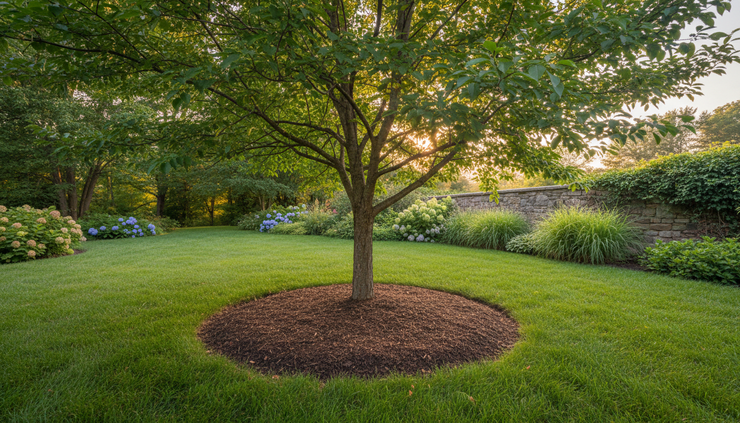
A late summer inspection is also a chance to support trees before winter. Mulch, watering, and soil care can make a difference, especially for younger trees or trees stressed by construction, drought, or compacted soil.
Good basic care includes:
Keeping mulch a few inches away from the trunk
Watering deeply during dry late-summer spells
Avoiding soil compaction over root zones
Removing vines that smother young trees
Protecting bark from mower and strimmer damage
These simple steps do not fix structural defects, but they help trees enter autumn in better condition.
A timely inspection can prevent a stressful autumn
Late summer is a useful pause between the growth of spring and the pressure of fall. Trees are still active, defects are easier to spot, and there is usually time to plan sensible care before storms and cold weather arrive.
For Hudson Valley properties, the best approach is simple: walk the site, look closely, document changes, and call a qualified arborist when a tree shows serious defects or sits near something valuable. A careful inspection now can mean fewer surprises when autumn weather tests every branch.


